What Size Lobster Catch Bag Do You Need for Florida Diving?

November 9, 2026

What Size Lobster Catch Bag Do You Need in Florida?

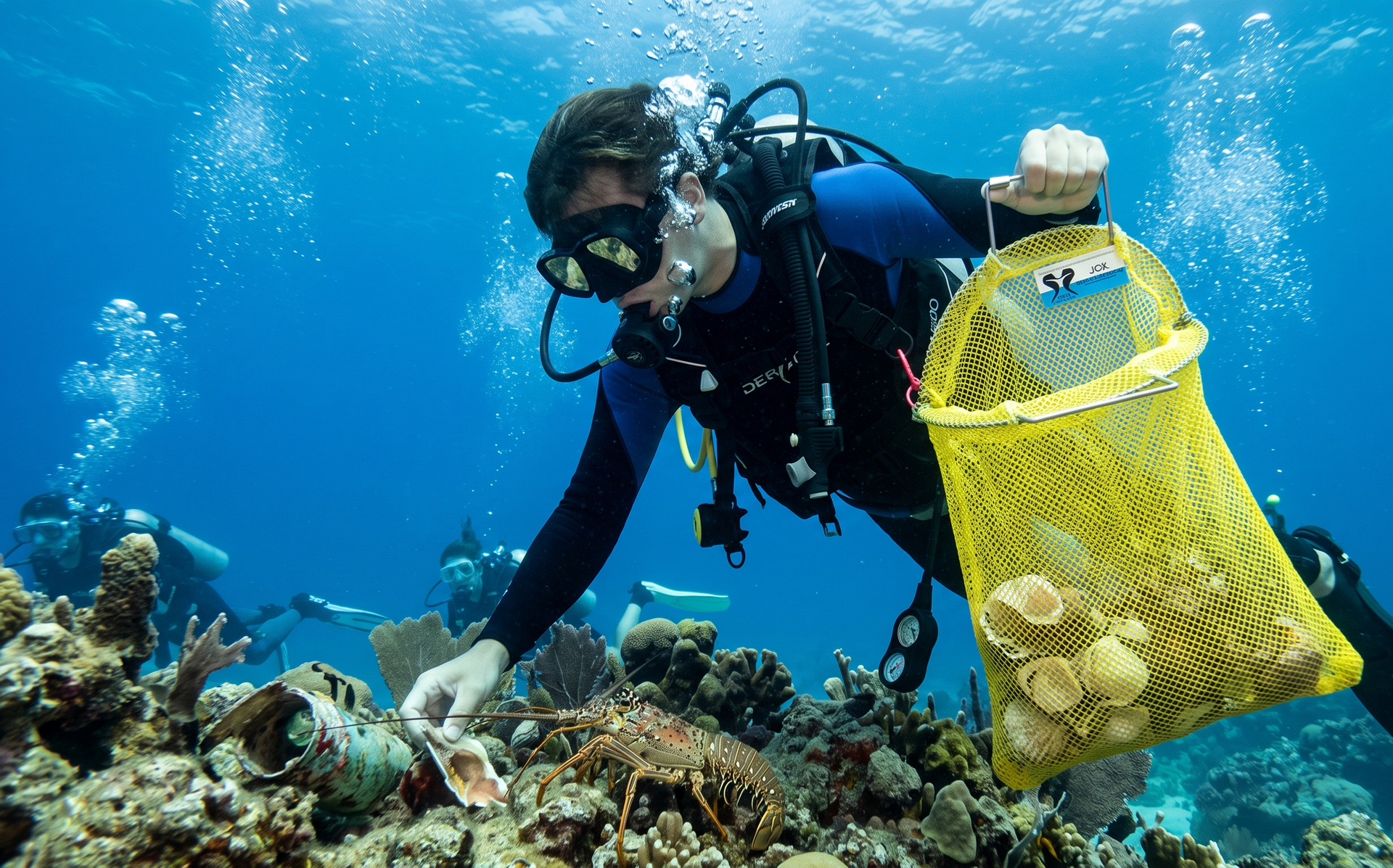
The right lobster catch bag should be large enough to hold your legal catch comfortably, but compact enough to manage safely underwater. For most recreational Florida lobster divers, the best choice is a purpose-built lobster bag with a secure opening, durable construction, and enough usable capacity for the planned harvest. Bigger isn't always better.

Whether you're diving offshore from Stuart, exploring reefs near Jupiter, or preparing for lobster season around Hobe Sound, choosing the correct catch bag can make your time underwater more efficient.

A bag that's too small may be difficult to load. A bag that's unnecessarily large can create drag, interfere with other equipment, and become awkward to manage.

Here's what to consider before buying your next lobster catch bag.

Why Does Lobster Catch Bag Size Matter?

A catch bag is one of the most frequently handled accessories during a lobster dive.

You may use it repeatedly while managing your buoyancy, checking your surroundings, and handling legal catch.

If the bag is poorly sized, these tasks become more complicated.

The ideal bag balances three priorities:

Enough room for your intended catch

Easy access to the opening

Comfortable, streamlined handling underwater

The goal is not to carry the largest bag available.

It's to carry a bag that works well with your diving style.

For divers who regularly visit South Florida reefs, a well-chosen bag can be more useful than simply adding more equipment.

How Much Lobster Can You Legally Keep in Florida?

Before comparing catch bag sizes, understand the regulations governing recreational spiny lobster harvest.

During Florida's regular recreational lobster season, the daily bag limit is six spiny lobster per person.

The minimum legal carapace size is larger than three inches, and lobster must be measured while in the water.

Harvesting egg-bearing lobster is prohibited.

The two-day recreational sport season, often called Mini Season, has additional regional rules, so divers should check the regulations applicable to their location and dates.

Your catch bag capacity should never be treated as your harvesting limit.

Even if a bag could physically hold more lobster, you must follow the legal possession and bag limits.

What Size Lobster Bag Is Best for Recreational Diving?

There isn't a universal bag dimension that works for every recreational diver.

Instead of choosing by advertised size alone, consider usable capacity and handling.

A good recreational lobster bag should provide enough space to insert legal-size lobster without forcing them through an opening that is difficult to use.

It should also remain manageable when loaded.

When evaluating a bag, ask:

  1. Is the opening large enough for the intended catch?
  2. Can I operate it while wearing gloves?
  3. Does the bag remain streamlined when empty?
  4. Is it manageable as catch is added?
  5. Can I attach it without interfering with essential equipment?
  6. Is the closure designed to help prevent escape?

These practical questions are often more valuable than choosing a bag based on its overall dimensions.

Should You Buy a Larger Lobster Catch Bag?

A larger bag may be useful in some situations, but additional capacity comes with trade-offs.

An oversized bag can be more difficult to position against your equipment.

It may create unnecessary drag while swimming.

It can also hang lower than expected, especially after catch is added.

For divers working around reef ledges, loose equipment may increase the risk of snagging or contacting the bottom.

A larger bag should therefore be selected because its capacity is genuinely needed, not because bigger automatically sounds better.

Remember that your legal catch limit still applies.

Can a Lobster Catch Bag Be Too Small?

Yes.

A bag with insufficient usable capacity may make it difficult to insert or manage legal-size lobster.

A narrow opening can also create unnecessary handling.

Divers should be able to use their equipment without rushing or forcing the catch into place.

However, the problem isn't always the total bag volume.

Sometimes the opening design is the limiting factor.

A bag may appear spacious when empty but still be difficult to load because of its closure.

That's why it's important to evaluate the entire design rather than focusing only on size.

Why the Bag Opening Matters as Much as Capacity

Imagine finding a legal lobster beneath a reef ledge.

You've captured it using an appropriate method and measured it underwater.

Now you need to secure it.

If your bag requires complicated handling every time you insert a lobster, the process can become frustrating.

A secure, accessible opening helps simplify this step.

Keystone Dive Products, based in Palm City, Florida, manufactures the patented Original Lobster Inn™, featuring a one-way insert flap.

The design allows catch to be inserted while helping prevent it from escaping through the opening.

This can reduce the need to repeatedly operate a conventional closure during catch storage.

For divers comparing bags, the opening mechanism deserves as much attention as the bag's overall capacity.

Internal Link: [Explore Keystone Dive Products – https://www.keystonediveproducts.com/]

Does Your Diving Style Affect Bag Size?

Absolutely.

Different diving activities create different equipment needs.

Scuba Diving

Scuba divers carry breathing equipment, buoyancy systems, and other essential accessories.

A lobster bag should fit into that equipment arrangement without blocking important controls or emergency releases.

The bag should remain accessible while maintaining a streamlined profile.

Freediving

Freedivers need equipment that does not interfere with safe movement, ascent, or buddy supervision.

A bulky catch bag can become an unnecessary complication.

Appropriate attachment and conservative equipment choices are particularly important.

Never allow catch handling to delay surfacing or interfere with breath-hold safety procedures.

Boat Diving

Boat divers may have more flexibility when selecting equipment because they can organize spare gear aboard the vessel.

However, the bag used underwater still needs to be manageable and secure.

Shore Diving

Shore divers may need to carry equipment farther before entering the water.

A compact, practical setup can make transporting gear easier.

Entry and exit conditions should also influence equipment selection.

Choosing a Catch Bag for Treasure Coast Diving

Local conditions matter when choosing diving equipment.

Around Stuart, Hobe Sound, and Jupiter, divers may encounter offshore reefs, limestone ledges, changing visibility, and current.

These environments reward careful equipment organization.

A bag that hangs too low can become awkward near reef structure.

An oversized bag may create unnecessary resistance while swimming.

A poorly positioned opening can make loading catch difficult.

For Treasure Coast lobster divers, the ideal setup should allow you to concentrate on your surroundings rather than constantly adjusting equipment.

Before a dive, practice reaching and operating the bag while wearing your normal gear.

What Materials Should You Look For?

Saltwater exposure can be demanding on diving equipment.

When selecting a catch bag, look for construction intended for marine use.

Important features include:

  • Durable bag material
  • Reinforced seams where appropriate
  • Corrosion-resistant hardware
  • Reliable attachment points
  • A secure catch-retention design
  • Components that can be cleaned after use

Mesh construction may allow water to pass through the bag and make rinsing easier, but the material must still be appropriate for the intended catch.

Inspect the stitching, opening, and attachment areas.

A durable bag should be able to withstand normal use without relying on unnecessary complexity.

How Should a Lobster Bag Attach to Your Gear?

Even the right-sized bag can become a problem if it's attached poorly.

A catch bag should remain accessible and should not interfere with your movement or safety equipment.

Avoid attaching it where it can obstruct:

  • Weight releases
  • Buoyancy controls
  • Breathing equipment
  • Emergency accessories
  • Normal fin movement

Use appropriate attachment hardware and follow the instructions for your diving equipment.

Check that the bag does not hang excessively low.

Practice the arrangement before diving in challenging conditions.

Internal Link Opportunity: Blog #13, How to Attach a Dive Catch Bag Safely for Treasure Coast Diving.

Do You Need Different Bags for Different Species?

In many cases, yes.

A lobster bag isn't necessarily the right choice for every type of harvest.

Scallops, crabs, fish, and lionfish have different handling and containment requirements.

For example, lionfish have venomous spines and require specialized handling procedures.

A bag intended for scallops may not be appropriate for lobster.

Keystone Dive Products offers purpose-built catch products for several harvesting activities, including lobster, scallops, and lionfish.

Choosing the right type of bag can be just as important as choosing the right size.

Internal Link Opportunity: Blog #19, How to Choose the Right Catch Bag for Lobster, Lionfish, Scallops, or Crab.

How to Test a Catch Bag Before Your Next Dive

You don't need to wait until you're underwater to evaluate whether a bag works with your equipment.

Start by attaching it to your normal diving setup.

Check whether you can reach the opening comfortably.

Next, inspect how the bag hangs when empty.

Move your arms and legs through normal diving motions.

Confirm that no essential equipment is obstructed.

Then practice operating the opening while wearing gloves.

If the arrangement feels awkward on land, it may become more difficult underwater.

Any in-water equipment practice should take place in suitable conditions with appropriate supervision.

Common Mistakes When Choosing a Lobster Bag

Buying the Largest Bag Available

More capacity doesn't automatically improve your diving experience.

Choose a size that matches your actual needs.

Ignoring the Opening Design

A large bag with a difficult opening may be less convenient than a properly designed bag with a suitable capacity.

Forgetting About Attachment

A bag must work with the rest of your equipment.

Using the Wrong Bag for the Species

Different harvesting activities may require different containment systems.

Overlooking Durability

Saltwater equipment needs appropriate materials and construction.

Failing to Inspect the Bag

Check for damaged seams, worn hardware, and other signs of deterioration before every trip.

How to Care for Your Lobster Catch Bag

Proper maintenance helps preserve your equipment.

After diving, rinse the bag thoroughly with fresh water.

Pay particular attention to areas where sand, salt, or debris may collect.

Inspect the opening, seams, and attachment points.

Allow the bag to dry before storing it.

Avoid leaving equipment exposed to unnecessary sunlight or heat for extended periods.

Follow the manufacturer's care recommendations.

If the bag develops damage that could compromise its function, repair it according to manufacturer guidance or replace it before your next dive.

FAQs About Lobster Catch Bag Size

What size lobster catch bag do I need?

Choose a bag with enough usable capacity for your planned legal catch while remaining compact, secure, and easy to handle. The best size depends on your diving style and the bag's opening design.

How many lobster can I keep in Florida?

During the regular recreational season, the daily bag limit is six spiny lobster per person. Special sport-season rules and location restrictions may differ, so always check FWC regulations.

Is a bigger lobster bag better?

Not necessarily. An oversized bag can create drag, interfere with equipment, and become difficult to manage underwater.

Can I use a regular mesh bag for lobster?

A general-purpose mesh bag may not provide the same catch-retention features as a purpose-built lobster bag. Evaluate the opening, construction, attachment system, and suitability for the intended activity.

What is a one-way lobster bag?

A one-way lobster bag uses an entry mechanism designed to allow catch to enter while helping prevent escape. Keystone's Original Lobster Inn™ uses a patented one-way insert flap.

Can I use the same bag for lobster and lionfish?

Lionfish have venomous spines and require specialized containment and handling. Use equipment specifically appropriate for lionfish rather than assuming a standard lobster bag is suitable.

Find the Right Lobster Catch Bag at Keystone Dive Products

The best lobster catch bag isn't necessarily the biggest.

It's the one that provides appropriate capacity, dependable catch retention, comfortable handling, and a practical fit with your diving equipment.

Whether you're preparing for a lobster dive near Stuart, heading offshore from Jupiter, or exploring South Florida's reefs, choosing the right bag helps keep your setup organized.

Keystone Dive Products Inc. manufactures the Original Lobster Inn™, featuring a patented one-way insert flap designed to help keep your catch secure.

Based in Palm City, Florida, Keystone offers purpose-built catch products for divers throughout the Treasure Coast and beyond.

[Explore Keystone Dive Products – https://www.keystonediveproducts.com/]

Choose equipment that fits your dive, your catch, and the conditions you'll encounter.

Recent Posts

Stay Informed. Dive Prepared.
Two divers sorting black dive gear on a boat deck beside the ocean
October 23, 2026
Shopping for a fish catch bag for diving? Compare entry designs, durability and handling for Florida divers. Explore Keystone's Fish-N-Lobster Inn.
Turquoise ocean cove with rocky breakwater, small boats, and a sandy beach under a bright blue sky
October 5, 2026
Learn how tides affect snorkeling and diving in South Florida, including visibility, currents, slack water, and the best times to hit the water. Plan your trip well.
Green crab on rocky seafloor under colorful aquarium lighting
September 18, 2026
Learn how to find spiny lobster in Florida, where they hide, what gear to bring, and tips for safe, successful Treasure Coast lobster diving adventures this season.
Five colorful mesh bags with white ring handles on a light surface, arranged like a fan.
September 2, 2026
Compare the Original Lobster Inn with traditional catch bags. Discover why one-way flap systems outperform zippers underwater for safer, easier lobster fishing.
Four scuba divers in black wetsuits and blue gear float in calm blue water.
August 18, 2026
Discover why Florida-made dive gear performs better in saltwater. Built for real conditions, not theory, with durable gear designed for serious divers for real use.
Scuba diver underwater collecting trash in a yellow mesh bag near a coral reef
August 3, 2026
Learn how to clean and maintain your dive catch bag after saltwater use. Extend gear life and keep performance high with proper care after every dive trip.
Fisherman unloading lobster traps on a dock beside a green bin and calm coastal water
July 17, 2026
Get ready for Florida's Lobster Mini Season with this Treasure Coast diving checklist. Learn what gear to bring, where to dive, and prepare for a great trip.
Scuba diver swimming over a coral reef surrounded by bright orange fish in clear blue water
July 2, 2026
Discover the amazing marine life you can encounter while snorkeling along Florida's Treasure Coast, from Stuart to Jupiter. Explore reefs, sea turtles, and fish now.
Snorkelers above a vibrant coral reef in clear turquoise water
June 17, 2026
Discover the best snorkeling spots from Stuart to Jupiter, Florida. Explore reefs, marine life, and underwater adventures along the Treasure Coast today! Book today!
Large fish on a grill in a boat, with a person holding a yellow lighter nearby
June 2, 2026
Discover the best scalloping gear setup for Florida. Improve efficiency, comfort, and catch success this season with expert tips and must-have equipment today!
Show More

Always Here When You Need Us

You can reach out any time — day or night. Our support is based in Palm City, Florida. We’re not a reseller or drop shipper. We build what we sell, and we back it up with personal service.